
Why did the Roman Empire split?
From Crisis to Permanent Division
Read Article →
Embark on a journey through the brilliant heritage of the world.
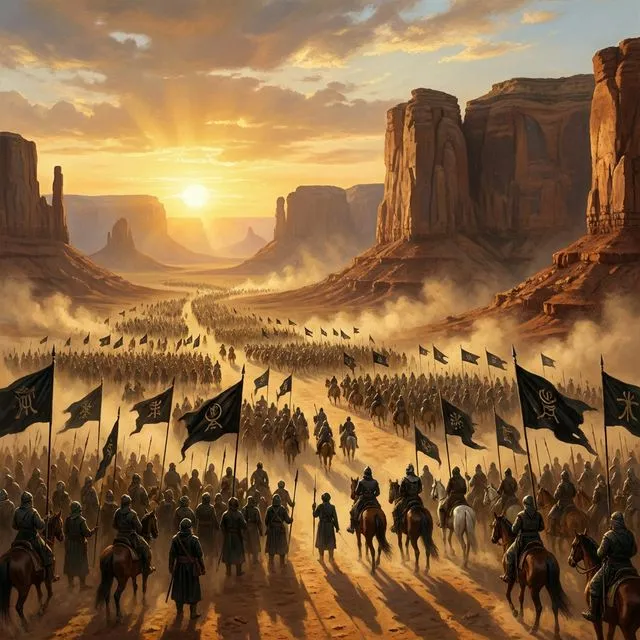
Abbasid Revolution
A massive military expedition initiated by the major kings of Europe (Richard I of England, Philip II of France, and Frederick I of the Holy Roman Empire) to recapture Jerusalem after it was taken by the Islamic hero Saladin. After fierce battles, the Crusaders failed to retake Jerusalem, but concluded with a peace treaty guaranteeing safe visits for Christian pilgrims.
A monumental conflict that reshaped the geopolitical landscape of East Asia, beginning with the Jurchen Jin invasion that destroyed the Northern Song, and concluding with the Treaty of Shaoxing which established the Southern Song Dynasty.
From 1230 to 1234, Ögedei Khan of the Mongol Empire, allied with the Southern Song dynasty, launched the final campaigns that completely destroyed the Jurchen-led Jin dynasty. With the successive fall of the capital Kaifeng and Caizhou, the Jin dynasty was wiped from history after dominating North China for over a century.
Following Babur's death, a twenty-year conflict erupted between the second Mughal emperor Humayun and the brilliant Afghan commander Sher Shah Suri over supremacy in northern India. Though Humayun was driven into a fifteen-year desert exile and the Mughal realm faced collapse, he dramatically reclaimed Delhi with Persian Safavid military support.
The Parni, a nomadic tribe of skilled horse archers led by the charismatic Arsaces I, seized the province of Parthia from the crumbling Seleucid Empire. This bold conquest marked the birth of the Parthian Empire, a superpower that would dominate the East and rival Rome for centuries.
A century-long era of legendary conflicts that followed the collapse of the Han dynasty, leading to the division of China into three rival states: Wei, Shu, and Wu. Celebrated globally as a time of mythic heroes and ingenious strategies.
